
FCC blocks two devices containing Huawei-linked surveillance chips
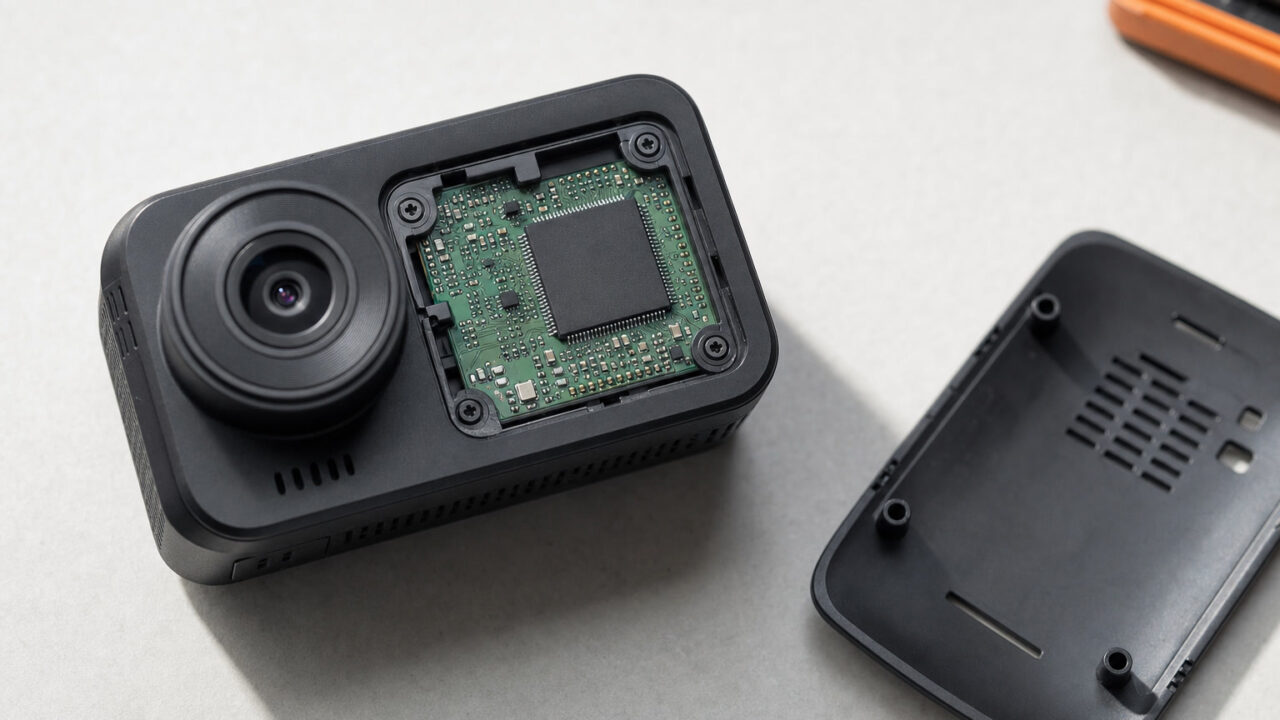
The US Federal Communications Commission has blocked a wireless video transmitter and a dashboard camera from entering the American market because they contain surveillance chips made by HiSilicon, a Huawei subsidiary. The action shows how restrictions on communications and surveillance equipment can now reach inside products to cover their components, not just the company named on the box.
The FCC announced the action on October 22, according to reporting published by The Record on October 23. This article was published on October 24, 2026 (UTC). The agency described the decisions as its first application of new component restrictions that took effect on October 13.
For people buying connected cameras and video equipment, the immediate significance is a supply-chain question: a device’s visible brand may not tell you who supplied the technology processing its footage.
What the FCC blocked
The two products are a wireless video transmitter and a dashboard camera. The Record reported that both contain chips manufactured by HiSilicon, which the FCC identified as a Huawei subsidiary on its Covered List.
The Covered List is the agency’s public directory of communications equipment and services deemed to pose an unacceptable national-security risk. The new rules extend restrictions to certain products containing covered components, even when the finished device would otherwise be lawful.
In its announcement of the two decisions, the FCC said its previous rules did not prevent otherwise lawful devices from incorporating component parts made by Covered List entities, The Record reported.
That distinction matters. A restriction aimed only at a finished product’s manufacturer can leave room for restricted technology to reach buyers inside another company’s hardware. The component rules address that route.
A surveillance-risk decision, not a finding of a specific breach
The FCC pointed to HiSilicon’s marketing of chips as designed for the surveillance market, including built-in human-face detection algorithms, according to The Record.
Face detection identifies the presence of a face in an image. It should not automatically be equated with face recognition, which attempts to determine whose face it is. Neither a chip’s capabilities nor its marketing alone establishes that a particular camera has secretly transmitted someone’s footage.
Chairman Brendan Carr described video devices containing surveillance chips from Covered List entities as an unacceptable national-security risk. That is the regulator’s assessment underpinning the action, not evidence in the available reporting that these two products were used in a documented spying incident.
The Record said Huawei did not immediately respond to its request for comment. Its report did not identify the finished products’ brands or model numbers, so it does not provide a reliable model-by-model checklist for existing owners.
What camera buyers can usefully check
The practical response is to look beyond a camera’s retail branding. Before buying a dashboard camera or networked video device, check the exact model, the manufacturer’s security-support policy, and whether video is stored locally, uploaded to a cloud account, or accessible remotely.
Those questions address different risks. A locally stored recording can still expose sensitive information if someone obtains the device. Cloud storage adds questions about account access, retention and who operates the service. Remote viewing creates another access path that needs protection and ongoing software support.
For business buyers, the FCC action makes component disclosure a more important procurement question. Ask suppliers which processors and communications modules a product uses, and what evidence supports its eligibility for the US market. A brand name alone is not an adequate answer about the hardware supply chain.
Existing owners should not interpret this report as an instruction to discard every Huawei-linked device. The reported action concerns two products under the new rules; it does not, by itself, establish that every device containing a HiSilicon chip is covered by these particular decisions.
Why a VPN is not the fix
A virtual private network can protect traffic along the connection between a device and a VPN server. It does not change the components inside a camera, determine what the camera records, or guarantee how a manufacturer handles footage after it reaches a service.
For this story, the useful privacy controls are equipment selection, transparent supply chains, supported software and limits on unnecessary remote access. The FCC’s action operates at that hardware-market boundary. It should not be mistaken for a problem consumers can resolve simply by switching on a VPN.